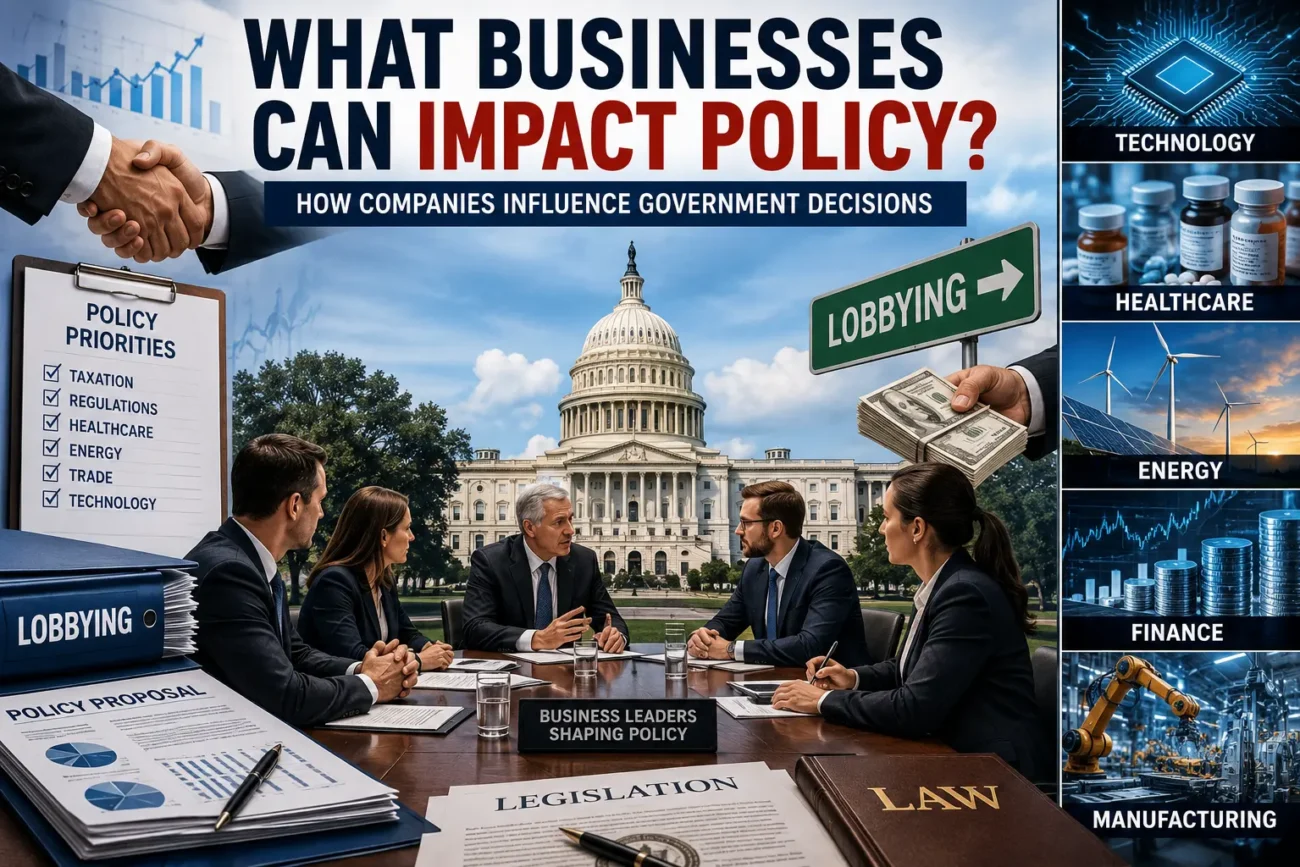
Businesses play a major role in shaping laws, regulations, and public decisions across the world. From technology companies to healthcare corporations, many industries work closely with governments to influence policies that affect their operations. If you have ever wondered what businesses can impact policy, the answer includes large corporations, trade groups, small businesses, and even startups that use lobbying, public campaigns, and industry influence to shape decision-making.
Today, business influence on policy affects areas like healthcare, taxes, environmental laws, technology regulations, labor rights, and international trade. Some people believe this influence helps economic growth and innovation. Others worry it gives powerful companies too much control over government decisions.
In this article, we will explore how businesses impact policy, the methods they use, the industries with the strongest influence, and the positive and negative effects this creates for society.
What Does “Businesses Impact Policy” Mean?
When businesses impact policy, they influence the laws and rules created by governments. Companies often try to shape policies that affect their profits, operations, employees, or industry growth.
For example:
- A tech company may push for easier data privacy rules.
- Energy companies may support policies that protect fuel production.
- Healthcare companies may lobby for drug pricing regulations.
Businesses can influence policies at:
- local level,
- state level,
- national level,
- and even international level.
This influence happens through lobbying, campaign donations, industry groups, and public awareness campaigns.
Why Governments Listen to Businesses
Governments often work closely with businesses because companies contribute heavily to the economy. Businesses:
- create jobs,
- pay taxes,
- invest in innovation,
- and support economic growth.
Large corporations also provide industry knowledge that lawmakers may not fully understand. For example, lawmakers often rely on technology companies to explain artificial intelligence or cybersecurity risks before creating new regulations.
However, this relationship can become controversial when companies gain too much influence over public decisions.
What Businesses Can Impact Policy the Most?
Some industries have stronger political influence than others. These industries spend billions every year on lobbying and public campaigns.
Technology Companies
Major technology firms like Google, Meta, and Amazon regularly influence policies related to:
- artificial intelligence,
- online privacy,
- cybersecurity,
- and digital advertising.
Tech companies often work with lawmakers to shape internet regulations and competition laws.
Pharmaceutical Companies
Healthcare and pharmaceutical companies have massive influence on public policy. Companies like Pfizer and Johnson & Johnson lobby governments on:
- drug pricing,
- patent laws,
- healthcare funding,
- and medical regulations.
These companies argue that strong patent protections help medical innovation.
Energy Businesses
Oil, gas, and renewable energy companies strongly influence environmental and energy policies.
For example, ExxonMobil and renewable energy firms often support different climate policies based on their business goals.
Energy companies influence:
- carbon emission laws,
- fuel regulations,
- energy subsidies,
- and climate policies.
Financial Institutions
Banks and investment companies also shape economic policy. They influence:
- tax laws,
- banking regulations,
- interest rate policies,
- and financial reporting rules.
Large financial organizations often work closely with policymakers during economic crises.
How Businesses Influence Government Policy
Businesses use several strategies to shape public policy decisions.
Lobbying
Lobbying is one of the most common methods businesses use. Lobbyists meet lawmakers and government officials to discuss laws that affect their industries.
Lobbyists:
- explain industry concerns,
- suggest policy changes,
- and provide research data.
Many companies hire professional lobbying firms to represent their interests in government.
Campaign Contributions
Some businesses support political candidates through donations. These contributions can help companies gain access to policymakers and political leaders.
Political Action Committees (PACs) often collect money from businesses and employees to support candidates who align with their interests.
This is one reason why discussions about campaign finance remain controversial.
Industry Associations
Trade groups and business associations help companies combine resources and influence.
Organizations like the:
- Chamber of Commerce,
- Business Roundtable,
- and National Association of Manufacturers
often lobby governments on behalf of entire industries.
These associations can have significant political power because they represent thousands of businesses.
Public Relations Campaigns
Businesses also shape public opinion through advertising and media campaigns.
Companies may:
- launch social media campaigns,
- sponsor news content,
- or fund public awareness programs.
The goal is often to build public support for policies that benefit the company or industry.
The Role of Social Media in Policy Influence
Social media has changed how businesses influence politics and government decisions.
Today, companies use platforms like:
- X,
- LinkedIn,
- TikTok,
- and Facebook
to influence public conversations about regulations and laws.
Businesses can quickly mobilize customers and employees to support policy campaigns online.
For example, tech companies often use online campaigns to influence debates about privacy laws or AI regulations.
This modern strategy allows businesses to reach millions of people almost instantly.
How Small Businesses Can Impact Policy
Large corporations usually receive the most attention, but small businesses also influence policy.
Small businesses often:
- join local chambers of commerce,
- contact lawmakers directly,
- participate in town halls,
- and support local economic policies.
Many governments rely on small business owners for feedback about:
- taxes,
- labor laws,
- and local regulations.
When small businesses work together, they can create strong political influence at local and state levels.
Positive Effects of Business Influence on Policy
Business influence is not always negative. In many cases, it can create positive outcomes.
Encouraging Innovation
Businesses help governments understand new technologies and industries.
For example, technology companies often provide expertise on:
- artificial intelligence,
- cybersecurity,
- and digital infrastructure.
This can help governments create smarter regulations.
Supporting Economic Growth
Businesses often advocate for policies that:
- create jobs,
- increase investment,
- and improve infrastructure.
Strong business activity can improve economic stability and create new opportunities for workers.
Improving Industry Standards
Some industries push for better regulations to improve safety and trust.
For example:
- food companies may support safety standards,
- healthcare firms may support medical research,
- and financial institutions may encourage fraud prevention policies.
Negative Effects of Corporate Influence
Although business involvement can help economies grow, it can also create serious concerns.
Unequal Political Power
Large corporations usually have more money and political access than ordinary citizens.
This creates concerns that wealthy companies may influence policies more than the public.
Regulatory Capture
Regulatory capture happens when government agencies become too closely connected with the industries they regulate.
This can weaken consumer protections and reduce accountability.
For example, critics sometimes argue that financial regulators become too influenced by large banks.
Environmental Concerns
Some businesses lobby against environmental protections to reduce operating costs.
This can slow climate action and weaken pollution laws.
Debates over climate policy often involve strong pressure from both traditional energy companies and renewable energy industries.
Ethical Concerns About Business Influence
One major debate surrounding what businesses can impact policy is ethics.
Many people ask:
- Should corporations have so much political influence?
- Do campaign donations create unfair advantages?
- Can lobbying harm democracy?
Supporters argue businesses deserve representation because policies directly affect them.
Critics believe governments should prioritize public interests over corporate profits.
This debate continues in countries around the world.
Can Business Influence Become Corruption?
Business influence becomes dangerous when it crosses ethical or legal boundaries.
Corruption may involve:
- bribery,
- hidden political payments,
- secret lobbying agreements,
- or unfair government favors.
Most countries have laws designed to prevent corruption, but transparency remains a major challenge.
Governments now require many lobbyists and political groups to disclose financial activities publicly.
The Future of Business Influence on Policy
Business influence will likely continue growing in the future.
Emerging technologies like:
- artificial intelligence,
- cryptocurrency,
- biotechnology,
- and renewable energy
will create new policy debates worldwide.
Companies that lead these industries will continue shaping government regulations.
At the same time, citizens are demanding more transparency and accountability from both governments and corporations.
This may lead to stricter lobbying rules and stronger oversight in the future.
How Citizens Can Respond to Corporate Influence
Citizens also play an important role in the policy process.
People can:
- vote,
- contact lawmakers,
- join advocacy groups,
- support transparency laws,
- and participate in public discussions.
A balanced democracy requires both business participation and strong public involvement.
When citizens stay informed, governments are more likely to create fair policies that benefit society as a whole.
Conclusion
Understanding what businesses can impact policy helps explain how modern governments and economies operate. Businesses influence laws through lobbying, campaign contributions, public relations, industry groups, and social media campaigns.
Industries like technology, healthcare, finance, and energy often have the strongest political influence because government decisions directly affect their profits and operations.
Business influence can create positive outcomes like innovation and economic growth. However, it can also raise concerns about corporate power, fairness, and political corruption.
As technology and global industries continue evolving, the relationship between businesses and government policy will remain one of the most important issues in modern society.
