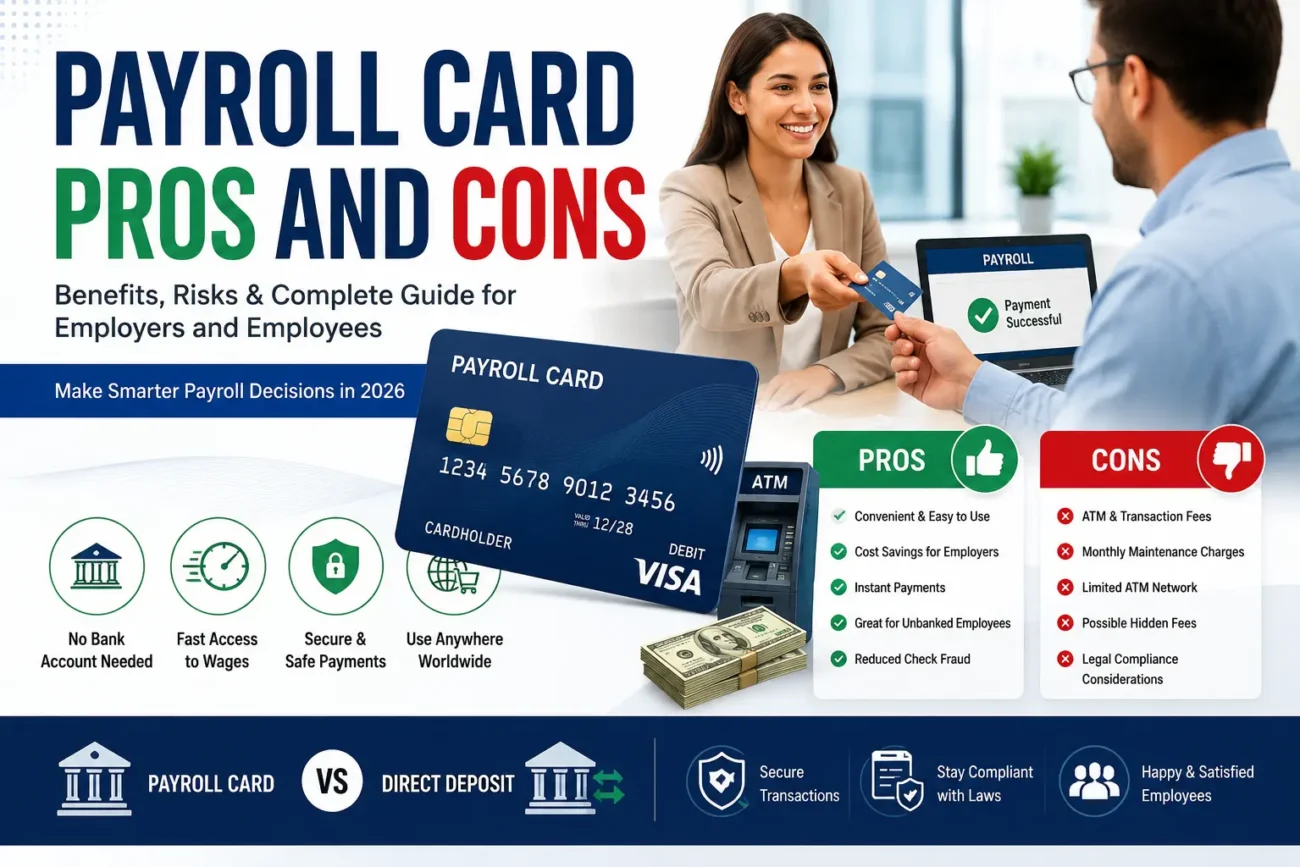
Digital payments are changing the way companies pay workers. Many businesses now use prepaid payroll cards instead of paper checks. That is why understanding the payroll card pros and cons is important for both employers and employees.
Payroll cards offer speed, convenience, and easy access to wages. They also help businesses reduce payroll costs. However, these cards can come with fees, legal concerns, and security risks if companies choose the wrong provider.
In this guide, you will learn how payroll cards work, their benefits and drawbacks, and whether they are the right payroll solution in 2026.
What Are Payroll Cards?
A payroll card is a prepaid card that employers use to pay wages. Instead of receiving a paper check or direct deposit, employees get their salary loaded onto a card.
The card works like a debit card. Workers can:
- Withdraw cash from ATMs
- Shop online
- Pay bills
- Use the card in stores
- Transfer money
Payroll cards are especially useful for employees who do not have bank accounts.
Many companies now use payroll cards as part of modern digital payroll systems.
How Payroll Cards Work
The process is simple.
Each payday, the employer transfers wages directly to the employee’s payroll card account. Employees can then access the funds immediately.
Most payroll cards are issued by major payment networks such as Visa or Mastercard. This allows workers to use them almost anywhere.
Some payroll card providers also offer mobile apps. Employees can:
- Check balances
- View transactions
- Receive alerts
- Transfer money
This makes payroll cards more flexible than traditional paper checks.
Payroll Card Pros and Cons Explained
Understanding the payroll card pros and cons helps businesses choose the right payment method.
While payroll cards provide convenience and cost savings, they also have limitations that employers should understand before implementation.
Let’s look at the advantages first.
Benefits of Payroll Cards for Employees
Fast Access to Wages
Employees usually receive funds instantly on payday. They do not need to wait for checks to clear.
This can help workers manage emergency expenses faster.
No Bank Account Needed
Millions of people remain unbanked or underbanked. Payroll cards give these workers access to digital payments without needing a traditional bank account.
This improves financial inclusion.
Safer Than Carrying Cash
Payroll cards are safer than cash payments. If the card gets lost, employees can report it and request a replacement.
Cash cannot be recovered once lost.
Easy Everyday Spending
Workers can use payroll cards for:
- Grocery shopping
- Online purchases
- Utility payments
- ATM withdrawals
Many employees prefer this flexibility.
Better Budget Management
Most payroll cards do not allow overdrafts. This helps users avoid debt and overspending.
Some cards also include budgeting tools through mobile apps.
Benefits of Payroll Cards for Employers
Lower Payroll Costs
Printing and processing paper checks costs money.
Payroll cards reduce expenses related to:
- Printing
- Mailing
- Administration
- Check replacement
Businesses with large workforces can save significant amounts each year.
Improved Payroll Efficiency
Payroll cards automate employee payments. HR teams spend less time handling paper checks and payroll errors.
This improves overall payroll management.
Reduced Fraud Risks
Paper checks are vulnerable to fraud and theft.
Payroll cards reduce risks linked to:
- Lost checks
- Forged signatures
- Mail theft
- Check fraud
Digital payroll systems offer better transaction tracking and security.
Better Employee Satisfaction
Employees appreciate fast and reliable wage access.
Offering flexible payroll options can improve workplace satisfaction and retention.
Eco-Friendly Payroll Solution
Reducing paper checks also helps companies lower paper waste.
Many businesses now promote payroll cards as part of their sustainability efforts.
Hidden Drawbacks and Payroll Card Fees
Although there are many advantages, businesses must also understand the risks.
This is where the real payroll card pros and cons discussion becomes important.
ATM Withdrawal Fees
Some payroll cards charge fees for ATM withdrawals, especially outside approved networks.
These charges can frustrate employees.
Monthly Maintenance Fees
Certain providers charge monthly service fees.
Small recurring charges may reduce employee earnings over time.
Balance Inquiry Charges
Some cards charge users for checking balances through ATMs or customer service lines.
Employers should always review fee structures carefully.
Limited ATM Access
Employees in rural areas may struggle to find free ATM locations.
This can create inconvenience.
Risk of Unauthorized Transactions
Like debit cards, payroll cards can be stolen or hacked.
Workers should monitor transactions regularly and report suspicious activity immediately.
Legal Compliance Challenges
Payroll laws vary by state and country.
Some regions require employers to offer multiple payment options instead of forcing workers to use payroll cards.
Businesses must ensure compliance before launching a payroll card program.
Payroll Cards vs Direct Deposit
Many employers compare payroll cards with direct deposit.
Both options support digital payroll systems, but they serve different needs.
| Feature | Payroll Cards | Direct Deposit |
|---|---|---|
| Requires Bank Account | No | Yes |
| Access to Funds | Instant | Instant |
| ATM Fees | Possible | Usually lower |
| Setup Simplicity | Easy | Moderate |
| Good for Unbanked Workers | Excellent | Limited |
| Fraud Protection | Strong | Strong |
Direct deposit works best for employees with bank accounts.
Payroll cards are often better for temporary workers, hourly employees, and unbanked individuals.
Are Payroll Cards Safe?
Security is one of the biggest concerns people have about payroll cards.
The good news is that most modern payroll cards include advanced security features.
These often include:
- PIN protection
- EMV chip technology
- Mobile transaction alerts
- Fraud monitoring
- Account freezing options
However, safety also depends on employee education.
Workers should:
- Protect PIN numbers
- Avoid sharing card information
- Use secure ATMs
- Review account activity often
Employers should partner with trusted payroll card providers that follow strong cybersecurity standards.
Payroll Card Laws and Compliance
Payroll card laws continue to evolve in 2026.
Employers must understand local labor regulations before using payroll cards.
Some states require businesses to:
- Provide clear fee disclosures
- Offer alternative payment methods
- Allow free wage withdrawals
- Obtain employee consent
Failure to follow payroll regulations can lead to fines or legal disputes.
Companies should regularly review labor laws and payroll compliance updates.
Consulting payroll professionals or employment attorneys is also recommended.
How to Choose the Best Payroll Card Provider
Not all payroll card providers offer the same services.
Employers should compare providers carefully before making a decision.
Look for Low Fees
Choose providers with minimal:
- ATM fees
- Monthly charges
- Replacement costs
Transparent pricing protects employees from hidden expenses.
Prioritize Security
Strong fraud protection is essential.
Look for providers that offer:
- Encryption
- Fraud alerts
- Mobile security tools
- Zero liability protection
Check Customer Support
Reliable support matters when employees lose cards or face payment issues.
24/7 customer service is ideal.
Evaluate Mobile Features
Modern workers expect digital tools.
The best payroll cards include apps for:
- Balance tracking
- Transfers
- Notifications
- Spending history
Ensure Compliance Support
Choose providers that understand payroll laws and compliance requirements.
This reduces legal risks for employers.
Common Payroll Card Mistakes to Avoid
Businesses often make avoidable payroll card mistakes.
Forcing Employees to Use Payroll Cards
Workers should have payment choices whenever possible.
Offering alternatives improves trust and compliance.
Ignoring Fee Structures
Employers should fully understand provider fees before implementation.
Unexpected charges damage employee satisfaction.
Choosing Low-Quality Providers
Cheap payroll card solutions may lack proper security or customer support.
Always research providers carefully.
Failing to Educate Employees
Workers should understand:
- How the card works
- Potential fees
- Security practices
- ATM access options
Education prevents confusion and complaints.
Future of Payroll Cards in 2026
Payroll cards continue to grow as digital payments expand worldwide.
Several trends are shaping the future of payroll cards:
Mobile Wallet Integration
Many payroll cards now connect with Apple Pay and Google Pay.
This improves convenience.
Faster Wage Access
Employers increasingly offer earned wage access and same-day payments through payroll cards.
AI Fraud Protection
Advanced AI systems now help detect suspicious activity faster.
Increased Financial Inclusion
Payroll cards continue helping unbanked workers join the digital economy.
As payment technology improves, payroll cards will likely become even more popular.
Frequently Asked Questions
Are payroll cards better than paper checks?
In many cases, yes. Payroll cards provide faster access to wages and better security than paper checks.
Do payroll cards affect credit scores?
No. Payroll cards are prepaid cards and usually do not impact credit history.
Can employees transfer money from payroll cards to bank accounts?
Some payroll card providers allow transfers to personal bank accounts.
Are payroll cards mandatory?
No. Many regions require employers to offer alternative payment methods.
Can payroll cards be used online?
Yes. Most payroll cards support online shopping and bill payments.
Final Thoughts on Payroll Card Pros and Cons
The payroll card pros and cons show that these payment solutions offer major benefits for both employers and employees.
Payroll cards improve payroll speed, reduce paper check costs, and support workers without bank accounts. They also strengthen payroll security and convenience.
At the same time, businesses must pay attention to fees, compliance rules, and provider quality.
For many companies, payroll cards are now an important part of modern payroll management. When implemented correctly, they can create a smoother and more flexible payment experience for everyone involved.
