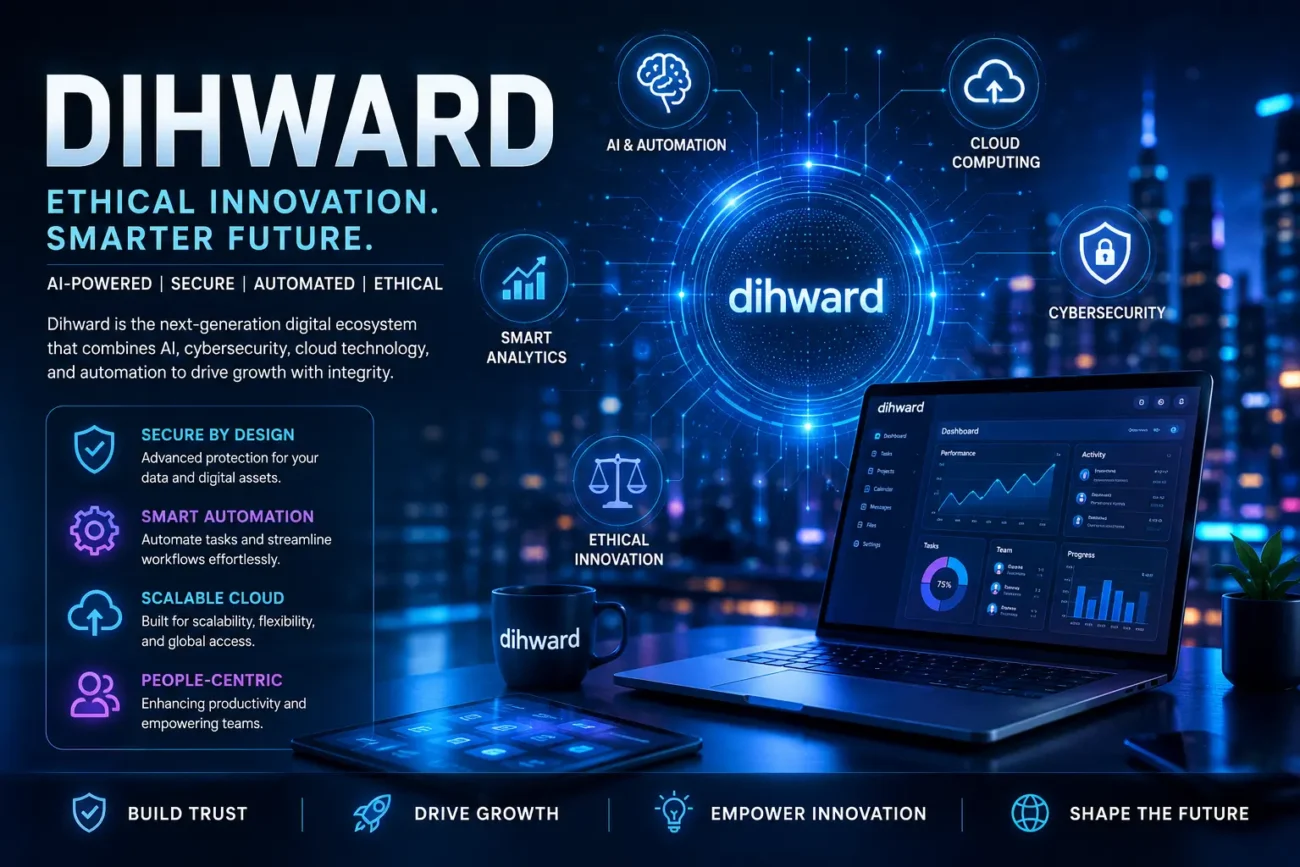
The digital world is changing fast, and businesses need smarter ways to manage technology, security, automation, and online growth. This is where dihward is gaining attention. Many experts now see it as a modern framework that combines innovation, ethics, flexibility, and digital transformation into one powerful system.
Unlike traditional platforms that focus on only one area, dihward supports multiple functions together. It connects artificial intelligence, cloud technology, cybersecurity, automation, and ethical business practices. This makes it useful for startups, enterprises, educators, marketers, and even creative professionals.
In this guide, you will learn everything about dihward, including its meaning, features, benefits, challenges, business uses, future trends, and why it is becoming important in 2026.
What Is Dihward?
Dihward is a modern digital framework designed to help people and businesses manage technology in a smarter and more ethical way. It combines digital innovation with strong values such as transparency, security, adaptability, and responsible growth.
Some experts describe the term as a mix of two ideas:
- “Dih” represents digital depth or innovation
- “Ward” represents guidance, protection, or forward movement
Together, these ideas create a concept focused on secure and ethical progress.
Today, many businesses use dihward as:
- a digital ecosystem,
- a productivity system,
- a business strategy,
- and an innovation framework.
Its flexibility makes it useful across many industries.
History and Origin of Dihward
The concept of dihward became more visible during the early 2020s. Businesses faced rapid changes in technology, remote work, cybersecurity threats, and artificial intelligence. Many organizations struggled to balance innovation with trust and security.
Traditional systems often created problems such as:
- disconnected software,
- poor communication,
- weak data security,
- and expensive management costs.
Dihward emerged as a response to these challenges. It promoted a more connected approach where businesses could combine different digital tools under one structure while maintaining ethical standards.
As AI and automation continued growing, people also started looking for systems that protected human values instead of focusing only on profits. This increased interest in dihward across technology and business communities.
Why Dihward Is Becoming Popular
Several factors are driving the popularity of dihward in 2026.
Rising Need for Digital Security
Cyberattacks continue increasing every year. Businesses now need stronger identity protection, secure cloud systems, and real-time monitoring. Dihward focuses heavily on cybersecurity and secure workflows.
Growth of Artificial Intelligence
AI tools are now part of everyday business operations. Companies want systems that can automate tasks without creating ethical risks. Dihward supports responsible AI integration.
Demand for Simpler Workflows
Many organizations use too many disconnected tools. This creates confusion and delays. Dihward helps simplify operations by combining multiple functions into one ecosystem.
Focus on Ethical Innovation
Modern consumers trust brands that value privacy, fairness, and transparency. Dihward promotes ethical business practices while still encouraging innovation.
Core Features of Dihward
Advanced Digital Identity Management
Identity management is one of the strongest parts of dihward. It helps businesses protect user accounts and sensitive information through:
- multi-factor authentication,
- encrypted access,
- biometric verification,
- and behavioral analysis.
This reduces fraud risks and improves customer trust.
AI-Powered Automation
Artificial intelligence plays a major role inside the dihward ecosystem. AI tools automate repetitive tasks such as:
- scheduling,
- customer support,
- data analysis,
- and workflow management.
This saves time and improves productivity.
Secure Cloud Infrastructure
Cloud technology gives businesses flexibility and scalability. Dihward allows organizations to store and manage data securely without depending on expensive physical servers.
Cloud systems also support:
- remote teams,
- global access,
- automatic backups,
- and disaster recovery.
Integrated Communication Tools
Many businesses waste time switching between apps. Dihward combines communication tools like:
- messaging,
- voice calls,
- calendars,
- and task discussions.
This creates smoother collaboration.
How Dihward Works
Dihward works by connecting multiple technologies into one unified platform. Instead of using separate systems for communication, analytics, security, and automation, users manage everything together.
The framework collects and organizes data from different departments. AI systems then analyze this information to provide useful insights and automate tasks.
For example:
- marketing teams can track campaigns,
- HR departments can manage employee workflows,
- customer support can automate responses,
- and leadership teams can monitor performance from one dashboard.
This centralized structure improves efficiency and reduces operational complexity.
Dihward in Technology and AI
Technology companies are using dihward to improve digital transformation strategies.
Artificial Intelligence Integration
AI systems inside dihward help businesses:
- predict trends,
- analyze customer behavior,
- improve decision-making,
- and automate support services.
Machine learning models continuously improve over time, making operations smarter and faster.
Cybersecurity Protection
Dihward uses advanced security layers to prevent cyber threats. These include:
- end-to-end encryption,
- anomaly detection,
- firewall protection,
- and automated security updates.
This proactive security approach helps organizations prevent attacks before they happen.
Data Analytics and Insights
Modern businesses rely heavily on data. Dihward provides integrated analytics dashboards that help organizations:
- monitor performance,
- identify market trends,
- improve strategies,
- and make faster decisions.
Dihward for Businesses and Startups
Businesses of all sizes can benefit from dihward.
Better Workflow Management
Teams can manage projects more efficiently using:
- shared dashboards,
- automated reminders,
- task tracking,
- and centralized communication.
This reduces delays and confusion.
Reduced Operational Costs
Maintaining multiple software tools can become expensive. Dihward helps companies save money by combining many functions into one platform.
Businesses often reduce:
- software licensing costs,
- maintenance expenses,
- and IT management time.
Improved Customer Experience
Customers expect fast and personalized service. Dihward helps companies deliver better experiences through:
- AI chat support,
- personalized recommendations,
- secure interactions,
- and faster communication.
Satisfied customers are more likely to stay loyal to a brand.
Benefits of Dihward
Stronger Security
Security remains one of the biggest advantages of dihward. Businesses gain better protection against:
- hacking,
- identity theft,
- phishing,
- and data breaches.
Better Productivity
Automation tools reduce repetitive work. Employees can focus more on strategic tasks instead of manual processes.
Scalability
Dihward grows with the business. Small startups and large enterprises can both use the same framework while scaling operations over time.
Ethical Innovation
Unlike many systems focused only on profits, dihward supports responsible and transparent growth. This improves brand reputation and customer trust.
Challenges and Limitations of Dihward
Although dihward offers many advantages, it also has some challenges.
Learning Curve
New users may need training to understand the full system properly.
Integration Issues
Some older software may not connect easily with modern dihward-compatible platforms.
Initial Investment
Businesses may need time and resources during the implementation process.
Unclear Definition
Because dihward is still evolving, some people interpret the concept differently. This can create confusion in marketing and communication.
Dihward vs Traditional Digital Systems
Traditional systems usually operate separately. Businesses often use one tool for communication, another for security, and another for analytics.
Dihward takes a more connected approach.
| Traditional Systems | Dihward |
|---|---|
| Separate tools | Unified ecosystem |
| Complex management | Centralized control |
| Higher operational costs | Cost-efficient workflows |
| Limited automation | AI-powered automation |
| Reactive security | Proactive cybersecurity |
| Basic analytics | Advanced data insights |
This integrated model improves efficiency and simplifies digital operations.
Is Dihward Safe and Legit?
Yes, dihward is generally considered safe when implemented correctly.
The framework focuses heavily on:
- cybersecurity,
- encryption,
- identity protection,
- and compliance standards.
Many organizations also appreciate its ethical approach to AI and digital transformation.
However, businesses should still:
- train employees properly,
- follow security best practices,
- and choose trusted technology partners.
Like any digital system, success depends on proper management.
How to Implement Dihward Successfully
Start With Clear Goals
Businesses should first identify what they want to improve. This may include:
- automation,
- security,
- customer support,
- or workflow management.
Use a Phased Approach
Instead of changing everything at once, companies should implement dihward step by step.
For example:
- Start with communication tools
- Add automation features
- Integrate analytics systems
- Expand security layers
This reduces disruption.
Train Employees
Good training improves adoption and productivity. Teams should understand how to use new tools effectively.
Common Mistakes to Avoid
Many businesses make avoidable mistakes when adopting new digital systems.
Ignoring Employee Training
Without proper guidance, teams may resist change.
Using Too Many Features at Once
Trying to implement every feature immediately can overwhelm users.
Neglecting Security Updates
Businesses should keep systems updated regularly to maintain protection.
Lack of Clear Strategy
Organizations need a long-term plan for digital transformation.
Future of Dihward in 2026 and Beyond
The future of dihward looks promising as technology continues evolving.
AI Will Become Smarter
Future AI systems may handle more advanced decision-making and predictive analytics.
Expansion Into Web3 and Blockchain
Blockchain integration may improve:
- transparency,
- identity verification,
- and digital trust.
Greater Focus on Ethical Technology
Consumers and governments are demanding responsible innovation. Dihward aligns strongly with these expectations.
More Industry Adoption
Healthcare, education, finance, and e-commerce sectors are expected to increase adoption of integrated digital ecosystems.
As businesses continue modernizing operations, dihward could become an important foundation for future digital transformation.
FAQs About Dihward
What is dihward used for?
Dihward is used for digital transformation, automation, cybersecurity, workflow management, and ethical innovation.
Is dihward only for technology companies?
No. Businesses across healthcare, education, finance, marketing, and retail can use dihward.
Does dihward support AI automation?
Yes. Artificial intelligence is one of the core components of the dihward ecosystem.
Is dihward secure?
Dihward focuses heavily on cybersecurity, encryption, and identity management to improve digital safety.
Why is dihward becoming popular?
Its combination of AI, security, automation, and ethical business practices makes it highly relevant in modern digital environments.
Conclusion
Dihward is more than just a technology trend. It represents a smarter and more ethical approach to digital transformation. By combining artificial intelligence, cloud systems, automation, cybersecurity, and responsible innovation, it helps businesses manage modern challenges more effectively.
Organizations today need solutions that improve efficiency without sacrificing trust or security. Dihward addresses these needs by creating a connected ecosystem that supports productivity, scalability, and long-term growth.
As digital transformation continues accelerating, businesses that adopt flexible and ethical systems like dihward may gain a strong advantage in the future.
