Introduction
In today’s digital world, people are no longer satisfied with simply watching content or attending events. They want experiences that are interactive, memorable, and emotionally engaging. This growing demand has led to the emergence of new concepts that combine technology, creativity, and human interaction. One such concept is spaietacle.
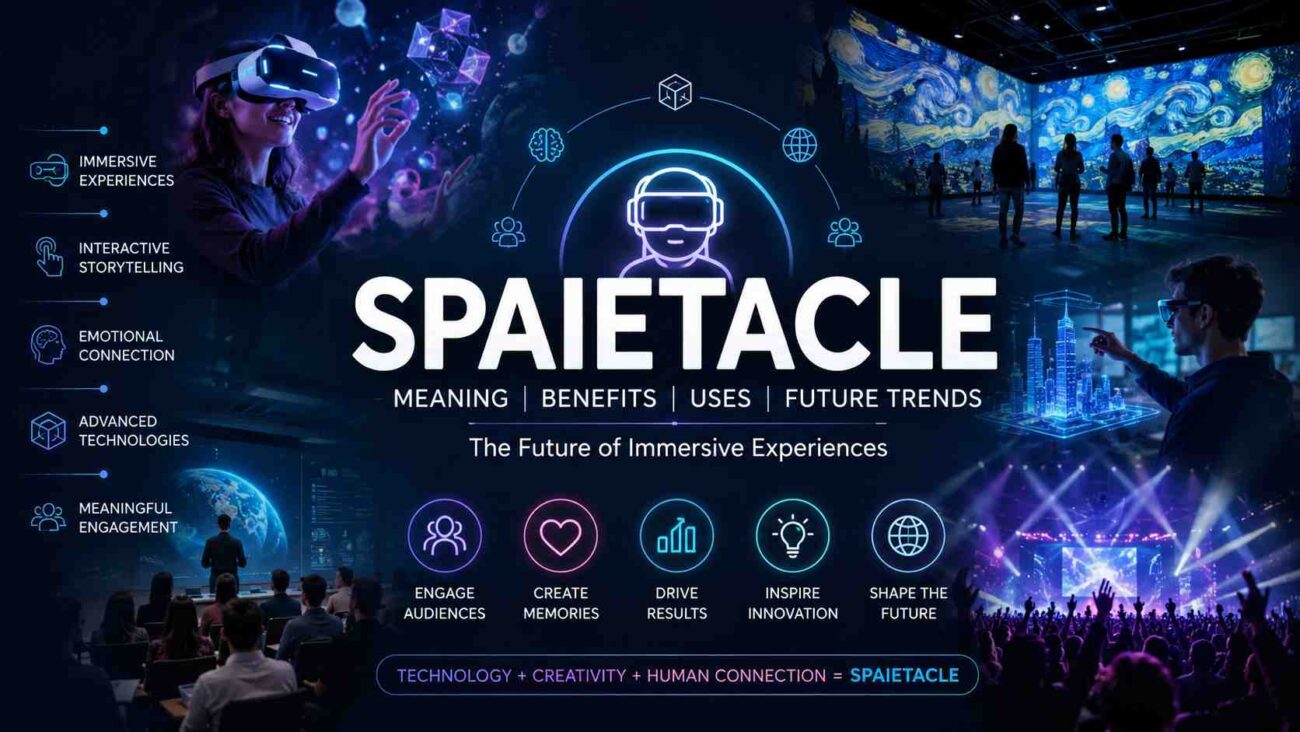
Although the term spaietacle is relatively new, it is gaining attention across various industries, including technology, marketing, entertainment, education, and art. At its core, spaietacle represents experiences that go beyond traditional viewing by actively involving participants in immersive environments. Instead of being passive observers, audiences become part of the story, creating deeper connections and lasting memories.
The rise of virtual reality, augmented reality, artificial intelligence, and interactive digital platforms has further accelerated the popularity of spaietacle. Businesses use it to engage customers, educators use it to improve learning experiences, and creators use it to build stronger emotional connections with their audiences.
In this comprehensive guide, you will learn what spaietacle means, where it originated, why it is becoming popular, and how it is transforming modern experiences across different industries.
What Is Spaietacle?
Spaietacle is a modern concept that combines immersive spaces, interactive storytelling, and engaging experiences to create meaningful connections between people and environments. Rather than focusing solely on visual entertainment, spaietacle aims to involve participants emotionally, physically, and mentally.
For beginners, the simplest way to understand spaietacle is to think of it as an experience where people become part of the action instead of merely watching it unfold. Whether it is a virtual reality experience, an interactive museum exhibit, or a brand activation event, the audience plays an active role.
What makes spaietacle different from ordinary experiences is its emphasis on engagement. Traditional events often place people in the role of spectators. In contrast, spaietacle encourages participation, exploration, and interaction. Every element is carefully designed to create a memorable journey.
The concept combines creativity, technology, design, storytelling, and audience involvement. Modern interpretations of spaietacle can be found in immersive art installations, virtual worlds, interactive exhibitions, experiential marketing campaigns, and even digital learning environments.
As technology continues to evolve, spaietacle is becoming an important framework for creating experiences that capture attention and foster genuine emotional connections.
The Meaning Behind Spaietacle
Linguistic Origin
The word “spaietacle” is often understood as a blend of the concepts of “space” and “spectacle.” This combination reflects the idea of creating environments that are both visually impressive and deeply interactive.
Traditionally, a spectacle referred to something designed to be seen and admired. Spectacles focused primarily on visual impact and audience observation. The addition of “space” introduces a new dimension, emphasizing environments where participants can move, explore, and interact.
As digital technology has transformed how people consume content, new terminology has emerged to describe these evolving experiences. Spaietacle represents this shift toward immersive and participatory environments that blur the boundaries between physical and digital spaces.
The term continues to evolve as industries adopt new technologies and creative approaches. While its definition may vary slightly depending on the context, the underlying principle remains the same: creating meaningful experiences through immersive engagement.
Core Philosophy
The philosophy behind spaietacle centers on the idea that experiences are more powerful than observation alone. Instead of simply presenting information or entertainment, spaietacle invites people to actively participate.
Emotional connection is a key component of this philosophy. People tend to remember experiences that make them feel something. By engaging multiple senses and encouraging interaction, spaietacle creates stronger emotional responses.
Another important aspect is participation. Traditional forms of entertainment often involve one-way communication where audiences consume content passively. Spaietacle transforms this dynamic into a two-way relationship where participants influence and shape their experiences.
Interactive storytelling is also central to the concept. Stories become more meaningful when individuals can explore, interact with characters or environments, and contribute to the narrative journey. This level of involvement creates deeper engagement and stronger memories.
History and Evolution of Spaietacle
Although the term spaietacle is modern, the ideas behind it have existed for centuries. Human societies have always sought ways to create engaging and memorable experiences through celebrations, performances, and communal gatherings.
Ancient festivals often combined visual displays, music, storytelling, and audience participation. Public ceremonies and theatrical performances were designed to immerse people in shared cultural experiences. These events laid the foundation for many of the principles associated with spaietacle today.
Throughout history, cultures around the world developed traditions that encouraged participation rather than passive observation. Religious ceremonies, community celebrations, and theatrical productions frequently involved audience interaction and emotional engagement.
The modern evolution of spaietacle accelerated with the rise of immersive entertainment. Theme parks, interactive museums, and experiential events began prioritizing audience involvement. Designers and creators recognized that people valued experiences that allowed them to engage directly with their surroundings.
The digital transformation era introduced entirely new possibilities. Virtual reality, augmented reality, and interactive digital platforms expanded the boundaries of immersive experiences. Users could now explore digital worlds, interact with virtual environments, and participate in experiences regardless of physical location.
Today, spaietacle continues to evolve as technology advances. The integration of artificial intelligence, mixed reality, and spatial computing is creating increasingly sophisticated experiences that blend physical and digital realities in innovative ways.
Why Spaietacle Is Becoming Popular
Demand for Experiences
Modern consumers increasingly prioritize experiences over material possessions. People seek memorable moments that provide personal meaning, social connection, and emotional satisfaction.
This shift has influenced industries ranging from travel and entertainment to retail and education. Organizations are responding by creating experiences that offer deeper engagement rather than simply delivering products or services.
Rise of Digital Culture
Digital culture has significantly contributed to the popularity of spaietacle. Social media platforms encourage users to share unique experiences, making immersive events and environments highly attractive.
People are constantly searching for content that is visually interesting, interactive, and shareable. Experiences that combine creativity and technology naturally generate attention online, increasing their visibility and appeal.
Audience Engagement
Traditional forms of communication often struggle to maintain attention in an increasingly crowded information landscape. Spaietacle addresses this challenge by making audiences active participants.
Interactive experiences encourage exploration, curiosity, and emotional investment. As a result, people spend more time engaging with the content and are more likely to remember it afterward.
The emotional impact created by immersive experiences also strengthens connections between participants and the organizations, brands, or creators behind them.
Technological Innovation
Rapid advancements in technology have made immersive experiences more accessible and effective. Virtual reality allows users to enter digital worlds, while augmented reality overlays digital elements onto physical environments.
Artificial intelligence enables personalized interactions, adapting experiences to individual preferences and behaviors. Spatial computing further enhances immersion by creating seamless interactions between users and digital content.
Together, these technologies provide the tools necessary to bring spaietacle concepts to life on a larger scale than ever before.
Key Characteristics of Spaietacle
Immersion
Immersion is one of the defining characteristics of spaietacle. Effective experiences engage multiple senses simultaneously, creating environments that feel realistic, captivating, and meaningful.
Whether through sound, visuals, touch, or movement, immersive experiences encourage participants to become fully engaged with their surroundings. This deeper level of involvement often leads to stronger emotional responses and improved memory retention.
Storytelling
Every successful spaietacle relies on compelling storytelling. Stories provide structure, meaning, and emotional context for the experience.
Rather than presenting information in a static format, spaietacle uses narratives to guide participants through a journey. These stories often evolve based on participant actions, creating a more personalized experience.
Interactivity
Interactivity transforms audiences from observers into participants. Users can make choices, influence outcomes, and engage directly with elements of the experience.
This active involvement creates a sense of ownership and investment that is difficult to achieve through traditional media formats.
Visual Impact
Strong visual design plays an important role in capturing attention and creating memorable impressions. Carefully designed environments, lighting effects, digital displays, and artistic elements contribute to the overall experience.
Memorability
Perhaps the most important characteristic of spaietacle is its ability to create lasting memories. Experiences that combine immersion, storytelling, and interaction often remain memorable long after they have ended.
Participants are also more likely to share these experiences with others, extending their influence and reach beyond the original audience.
How Spaietacle Differs From Traditional Spectacles
At first glance, spaietacle may seem similar to a traditional spectacle because both aim to capture attention and create memorable moments. However, there are important differences between the two concepts.
| Traditional Spectacle | Spaietacle |
| Passive viewing | Active participation |
| Fixed audience role | Interactive audience role |
| Visual focus | Multi-sensory focus |
| Temporary attention | Lasting engagement |
| One-way communication | Two-way interaction |
Traditional spectacles are typically designed to be observed. Examples include stage performances, fireworks displays, or large public events where the audience watches from a distance. The focus is often on visual presentation and entertainment.
Spaietacle, on the other hand, transforms the audience into participants. Instead of simply watching, people interact with the environment, influence outcomes, and become part of the experience itself. This shift creates a deeper emotional connection and encourages meaningful engagement.
Another key difference is the use of multiple senses. While traditional spectacles often rely heavily on visual appeal, spaietacle combines visuals, sound, movement, touch, and sometimes even scent to create immersive environments. This multi-sensory approach helps participants feel more connected to the experience.
Most importantly, spaietacle creates lasting engagement. People are more likely to remember experiences in which they actively participated compared to events they merely observed. This is why many organizations are moving beyond traditional presentations and adopting immersive experience strategies.
Main Elements of a Successful Spaietacle
Creating a successful spaietacle requires careful planning and a combination of creative, technological, and emotional elements. Every component must work together to produce a seamless and memorable experience.
Space design is one of the most important foundations. Whether physical or digital, the environment should encourage exploration and interaction. Well-designed spaces guide participants naturally while maintaining a sense of discovery.
Storytelling provides purpose and direction. A strong narrative helps participants understand their role within the experience and creates emotional investment. The most effective spaietacle experiences use storytelling to connect audiences with ideas, brands, or communities in meaningful ways.
Technology integration enhances immersion. Technologies such as virtual reality, augmented reality, artificial intelligence, and interactive displays can make experiences more dynamic and personalized. However, technology should support the experience rather than dominate it.
Audience interaction is another essential element. Participants should have opportunities to make choices, contribute ideas, or influence outcomes. These interactions increase engagement and make the experience feel unique.
Emotional triggers play a powerful role in creating memorable experiences. Music, visual design, storytelling, and social interaction can all evoke emotions that strengthen memory and connection.
Personalization has become increasingly important in modern spaietacle experiences. Tailoring content or interactions to individual preferences helps participants feel valued and understood.
Finally, community involvement can extend the impact of a spaietacle beyond the event itself. Shared experiences often foster stronger social connections and encourage ongoing engagement.
Types of Spaietacle Experiences
Spaietacle can take many forms depending on its purpose, audience, and environment. Understanding the different types helps illustrate the versatility of this concept.
Digital Spaietacle
Digital spaietacle experiences exist primarily in online environments. These may include virtual worlds, interactive websites, digital storytelling platforms, or immersive gaming experiences. Participants can engage with content from anywhere in the world while still feeling connected to the experience.
Advancements in technology have enabled creators to build increasingly realistic digital environments that encourage exploration and interaction. Digital spaietacle is especially valuable because it offers scalability and accessibility.
Physical Spaietacle
Physical spaietacle takes place in real-world locations. Museums, art exhibitions, immersive installations, and experiential events are common examples. These experiences use physical space, design, and sensory elements to engage participants.
Visitors often move through carefully designed environments where they can interact with displays, participate in activities, and discover stories through direct experience.
Hybrid Spaietacle
Hybrid experiences combine physical and digital elements. Participants may interact with augmented reality content in a physical environment or attend live events enhanced by digital technologies.
This approach provides flexibility and allows creators to reach broader audiences while maintaining immersive engagement.
Cultural Spaietacle
Cultural spaietacle focuses on heritage, traditions, and community experiences. Festivals, cultural celebrations, and traditional performances can all incorporate immersive elements that encourage participation and learning.
These experiences help preserve cultural identity while making traditions more accessible to modern audiences.
Applications of Spaietacle Across Industries
The influence of spaietacle extends far beyond entertainment. Organizations across multiple industries are using immersive experiences to improve engagement, communication, and outcomes.
Marketing and Branding
Brands increasingly use spaietacle to create memorable customer experiences. Product launches, experiential marketing campaigns, and immersive brand activations allow consumers to interact directly with products and services.
Instead of relying solely on advertisements, companies create environments where customers can experience a brand’s values and identity firsthand.
Entertainment Industry
The entertainment industry has embraced spaietacle through interactive theater, immersive exhibitions, virtual concerts, and live events. These experiences encourage audiences to participate rather than simply observe.
As a result, entertainment becomes more engaging, personal, and memorable.
Education
Educational institutions are discovering the value of immersive learning experiences. Virtual classrooms, interactive simulations, and experiential learning environments help students understand complex concepts more effectively.
By actively participating in lessons, learners often retain information better and develop stronger critical thinking skills.
Retail and E-commerce
Retailers use spaietacle to enhance shopping experiences. Interactive stores, virtual showrooms, and augmented reality product demonstrations help customers make informed decisions while increasing engagement.
This approach bridges the gap between digital and physical shopping experiences.
Tourism
Tourism organizations use immersive storytelling and interactive attractions to enrich visitor experiences. Travelers can explore historical events, cultural traditions, and local stories through engaging and educational experiences.
Architecture and Urban Design
Architects and city planners are incorporating interactive technologies into public spaces. Smart environments and immersive installations can improve community engagement and enhance urban experiences.
Healthcare
Healthcare professionals are exploring immersive technologies for therapy, rehabilitation, and patient education. These applications can improve patient engagement and support more effective treatment outcomes.
Technology Powering Spaietacle
Technology serves as the backbone of many modern spaietacle experiences. While creativity remains essential, technological innovation provides the tools needed to create immersive and interactive environments.
Virtual Reality (VR)
Virtual reality allows participants to enter fully digital worlds. By wearing VR headsets, users can explore environments that feel realistic and interactive. This technology is widely used in gaming, training, education, and entertainment.
Augmented Reality (AR)
Augmented reality overlays digital information onto the physical world. Through smartphones, tablets, or specialized glasses, users can interact with digital elements while remaining connected to their real-world surroundings.
Artificial Intelligence (AI)
Artificial intelligence enables personalized experiences. AI can analyze user behavior, adapt content, and create dynamic interactions that respond to individual preferences in real time.
Projection Mapping
Projection mapping transforms ordinary surfaces into dynamic visual displays. Buildings, walls, and objects can become immersive storytelling platforms through carefully designed projections.
Spatial Audio
Sound plays a critical role in immersion. Spatial audio technology creates realistic sound environments that change based on participant location and movement, making experiences feel more natural and engaging.
Interactive Sensors
Sensors can detect movement, touch, gestures, and other forms of interaction. These inputs allow environments to respond dynamically to participant behavior.
Mixed Reality
Mixed reality combines physical and digital worlds, enabling users to interact with both simultaneously. This technology creates highly engaging experiences that blend real and virtual elements.
IoT Integration
The Internet of Things connects devices, sensors, and systems to create responsive environments. This connectivity supports personalization, automation, and real-time interaction.
Benefits of Spaietacle
The growing popularity of spaietacle is largely driven by the benefits it offers individuals, businesses, and communities.
Benefits for Individuals
For individuals, spaietacle provides opportunities for creativity, learning, and emotional engagement. Immersive experiences stimulate curiosity and encourage active participation.
People often learn more effectively when they interact directly with information rather than passively consuming it. The emotional connections created through immersive experiences can also improve memory retention and overall satisfaction.
Additionally, spaietacle encourages exploration and self-expression. Participants become active contributors to experiences rather than passive observers.
Benefits for Businesses
Businesses benefit from higher engagement levels and stronger customer relationships. Immersive experiences capture attention more effectively than traditional marketing methods and often generate positive word-of-mouth promotion.
Customer retention also improves when brands create memorable and meaningful interactions. People are more likely to remember and return to organizations that provide unique experiences.
Spaietacle can also help businesses differentiate themselves in competitive markets by offering innovative ways to connect with audiences.
Benefits for Communities
Communities benefit through shared experiences that strengthen social connections. Cultural events, public installations, and community-focused projects encourage participation and collaboration.
Spaietacle can also support cultural preservation by making traditions and heritage more engaging for younger generations. Through immersive storytelling, communities can share their history and values in ways that resonate with modern audiences.
The Psychology Behind Spaietacle
The effectiveness of spaietacle is deeply connected to human psychology. Understanding why immersive experiences are so powerful helps explain their growing popularity.
Humans are naturally attracted to experiences that engage multiple senses. Multi-sensory environments stimulate the brain more effectively than single-channel communication, leading to increased attention and engagement.
Emotional storytelling is another important factor. Stories help people process information, build connections, and remember experiences. When participants become part of a story, they often develop stronger emotional attachments.
Memory formation is closely linked to participation. Research consistently shows that people remember experiences better when they actively engage with them. This principle explains why immersive experiences tend to leave lasting impressions.
The concept of attention economics also plays a role. In a world filled with competing information and distractions, capturing attention has become increasingly difficult. Spaietacle succeeds because it offers experiences that are engaging enough to hold attention for extended periods.
Behavioral engagement further enhances effectiveness. When people make decisions, interact with environments, and contribute to outcomes, they develop a stronger sense of ownership and investment in the experience.
By combining immersion, emotion, participation, and storytelling, spaietacle aligns with fundamental aspects of human psychology, making it one of the most powerful approaches to modern engagement.
How Brands Are Using Spaietacle
As consumer expectations continue to evolve, brands are looking for new ways to capture attention and build meaningful relationships with their audiences. This is where spaietacle has become a valuable strategy. Instead of relying only on traditional advertising, companies are creating immersive experiences that allow customers to interact directly with products, services, and brand stories.
Experiential marketing campaigns are among the most common examples. Rather than simply showing advertisements, brands design environments where customers can explore, test, and experience products in memorable ways. These experiences often create stronger emotional connections because people actively participate instead of passively receiving information.
Interactive product launches have also become increasingly popular. Companies use virtual reality demonstrations, augmented reality applications, and immersive events to introduce new products. This approach helps consumers understand features and benefits through direct engagement.
Another important application is the creation of immersive customer journeys. Every interaction, from online browsing to in-store visits, can be designed as part of a larger experience. By maintaining consistency across touchpoints, brands can strengthen loyalty and improve customer satisfaction.
Social media has amplified the impact of spaietacle. Experiences that are visually impressive and highly interactive encourage users to share photos, videos, and stories online. This user-generated content extends the reach of campaigns and helps brands gain organic visibility.
Through storytelling, technology, and participation, brands are using spaietacle to move beyond marketing messages and create genuine experiences that customers remember long after the interaction ends.
Spaietacle in the Digital World
The digital landscape has become one of the most important environments for spaietacle. As online experiences grow more sophisticated, creators and organizations are finding new ways to engage audiences through immersive digital interactions.
Social Media
Social media platforms have transformed how people discover and share experiences. Interactive filters, live events, augmented reality effects, and immersive content allow users to participate rather than simply consume information. This level of engagement aligns perfectly with the principles of spaietacle.
Content Creation
Content creators are increasingly using immersive storytelling techniques to attract audiences. Videos, interactive articles, virtual experiences, and live streams can all be designed to encourage participation and emotional connection.
Virtual Communities
Online communities provide opportunities for people to connect through shared interests and experiences. Virtual events, collaborative projects, and interactive platforms allow participants to engage with one another regardless of location.
Metaverse Experiences
The growth of virtual worlds has expanded the possibilities for spaietacle. Users can attend events, explore digital spaces, and interact with others in environments that blend entertainment, social interaction, and creativity.
Digital Art Platforms
Artists are using digital technologies to create interactive works that respond to audience participation. These experiences challenge traditional boundaries between creator and observer, making art more engaging and accessible.
Creator Economy
The creator economy has benefited significantly from immersive experiences. Influencers, educators, artists, and entrepreneurs use interactive content to build stronger relationships with their audiences and create more meaningful engagement.
As technology continues to evolve, the role of spaietacle in the digital world is expected to grow even further.
Challenges and Limitations of Spaietacle
Despite its many advantages, spaietacle also presents several challenges that organizations and creators must address.
One of the most significant obstacles is cost. Developing immersive experiences often requires investments in technology, design, content creation, and infrastructure. Smaller organizations may find it difficult to allocate the resources necessary for large-scale projects.
Technology barriers can also limit adoption. Not all audiences have access to advanced devices such as virtual reality headsets or high-performance hardware. This can create limitations in accessibility and participation.
Accessibility concerns are particularly important. Experiences should be designed to accommodate people with different abilities and needs. Failure to consider accessibility can exclude potential participants and reduce the overall effectiveness of the experience.
Privacy is another growing concern. Many immersive technologies collect data to personalize interactions and improve performance. Organizations must handle this information responsibly and maintain transparency regarding data usage.
Content overload can also become a challenge. In a world where audiences are constantly exposed to new experiences, maintaining novelty and relevance requires ongoing creativity and innovation.
Technical complexity may create additional difficulties. Integrating multiple technologies, managing interactive systems, and ensuring smooth user experiences often require specialized expertise.
Although these challenges exist, thoughtful planning and responsible implementation can help organizations maximize the benefits of spaietacle while minimizing potential drawbacks.
Future Trends of Spaietacle
The future of spaietacle is closely linked to advancements in technology and changing consumer expectations. As innovation continues, immersive experiences are expected to become even more personalized, intelligent, and accessible.
AI-Powered Experiences
Artificial intelligence will play a major role in shaping future experiences. AI systems will be able to adapt content in real time, creating personalized journeys based on user preferences, behaviors, and interests.
Hyper-Personalization
Future spaietacle experiences will focus on delivering highly customized interactions. Participants will receive content, recommendations, and experiences tailored specifically to their needs and goals.
Metaverse Integration
Virtual worlds are expected to become increasingly sophisticated. Businesses, educators, artists, and communities may use metaverse environments to create immersive experiences that combine social interaction, entertainment, and commerce.
Smart Cities
Urban environments are likely to incorporate more interactive technologies. Public spaces could become dynamic platforms for education, culture, and community engagement through immersive installations and responsive systems.
Sustainable Immersive Experiences
Sustainability will become a key consideration. Designers and organizations will seek environmentally responsible ways to create impactful experiences while reducing resource consumption.
Digital Twins
Digital twins, which are virtual representations of physical environments, will allow users to explore and interact with real-world locations remotely. These applications have significant potential in education, tourism, and urban planning.
Extended Reality (XR)
Extended reality, which includes virtual reality, augmented reality, and mixed reality, will continue to evolve. Improved hardware and software will make immersive experiences more realistic, affordable, and widely available.
These trends suggest that spaietacle will remain an important part of how people learn, communicate, work, and connect in the future.
How to Create Your Own Spaietacle
Creating a successful spaietacle does not always require expensive technology or large budgets. What matters most is designing an experience that engages people in meaningful ways.
The first step is to define a clear purpose. Understanding what you want participants to learn, feel, or accomplish provides direction for the entire experience.
Next, identify and understand your audience. Knowing their interests, motivations, and expectations helps ensure that the experience remains relevant and engaging.
Storytelling should form the foundation of the experience. A compelling narrative gives participants a reason to explore and connect emotionally with the content.
Designing the space is equally important. Whether the environment is physical, digital, or hybrid, it should support exploration, interaction, and immersion.
Technology should be integrated thoughtfully. The goal is not to use technology for its own sake but to enhance engagement and support the overall experience.
Interactive elements encourage participation. Opportunities for decision-making, collaboration, and exploration help create a stronger sense of involvement.
Measuring user engagement allows creators to evaluate effectiveness and identify areas for improvement. Feedback, analytics, and participant observations can provide valuable insights.
Finally, continuous improvement is essential. The most successful experiences evolve over time based on audience needs, technological advancements, and creative innovation.
Real-World Examples of Spaietacle
Many modern experiences demonstrate the principles of spaietacle in action. Immersive museums have transformed traditional exhibitions by allowing visitors to interact with displays and explore stories in dynamic ways.
Interactive exhibitions combine technology, art, and storytelling to create environments where visitors become active participants. Rather than simply viewing objects, they engage directly with content and influence their own experience.
Virtual concerts have expanded the possibilities of live entertainment. Audiences can attend performances in digital environments, interact with other participants, and enjoy experiences that would be impossible in traditional venues.
Brand activation events provide another example. Companies create immersive experiences that allow customers to engage with products and services in memorable ways.
Digital art experiences often encourage visitors to influence visual displays, sounds, or narratives through movement and interaction. This transforms art from a passive activity into a collaborative experience.
Projection mapping shows use light and animation to transform buildings and public spaces into immersive storytelling environments. These events attract large audiences and create unforgettable visual experiences.
Experiential retail stores are also becoming more common. By combining technology, personalization, and interactive design, retailers create shopping environments that are both informative and entertaining.
Common Misconceptions About Spaietacle
It Is Just Entertainment
One common misconception is that spaietacle only applies to entertainment. In reality, its principles are used in education, healthcare, marketing, tourism, and many other fields.
It Requires Expensive Technology
While advanced technologies can enhance immersive experiences, effective spaietacle does not always require significant investment. Creativity, storytelling, and audience engagement are often more important than expensive equipment.
It Only Works for Large Brands
Organizations of all sizes can benefit from spaietacle. Small businesses, community groups, educators, and independent creators can use immersive experiences to engage audiences effectively.
It Is the Same as a Spectacle
Although the terms sound similar, spaietacle goes beyond visual presentation. It emphasizes participation, interaction, and emotional engagement rather than passive observation.
Understanding these differences helps organizations use the concept more effectively and avoid common misunderstandings.
Why Spaietacle Matters in Modern Society
Modern society is increasingly driven by experiences. People seek meaningful interactions, emotional connections, and opportunities for participation. Spaietacle addresses these needs by creating environments where engagement becomes more personal and impactful.
Human connection remains one of the most valuable aspects of immersive experiences. Whether online or offline, shared experiences bring people together and strengthen relationships.
Creativity and innovation also thrive within spaietacle environments. By encouraging exploration and interaction, these experiences inspire new ideas and perspectives.
Digital transformation continues to reshape how people communicate, learn, and work. Spaietacle provides a framework for making these interactions more engaging and effective.
Community engagement benefits as well. Immersive experiences can bring diverse groups together around shared stories, cultural traditions, and collective goals.
As the experience economy continues to grow, organizations that create meaningful and memorable interactions will be better positioned to connect with audiences and build lasting relationships.
FAQ’s
Can small businesses use spaietacle effectively?
Yes. Small businesses can create engaging experiences through interactive events, storytelling, creative store designs, and digital experiences without requiring large budgets.
Does spaietacle only involve technology?
No. Technology can enhance a spaietacle, but strong storytelling, creative design, and audience participation are often the most important elements.
Can spaietacle improve learning outcomes?
Yes. Interactive and immersive experiences help learners stay engaged, understand concepts more clearly, and retain information longer.
Is spaietacle suitable for online audiences?
Absolutely. Virtual events, interactive websites, digital communities, and immersive online experiences can all apply the principles of spaietacle.
Will spaietacle become more common in the future?
Most experts believe it will. Advances in AI, XR technologies, and digital platforms are making immersive experiences more accessible and effective across industries.
Conclusion
Spaietacle represents a powerful shift from passive observation to active participation. By combining immersive environments, storytelling, technology, and human interaction, it creates experiences that are more engaging, memorable, and meaningful. From marketing and education to entertainment and healthcare, its applications continue to expand as organizations seek better ways to connect with audiences.As technology evolves and consumer expectations change, the importance of spaietacle is likely to grow. Businesses, creators, educators, and communities that embrace immersive experiences can build stronger connections, inspire deeper engagement, and create lasting value. The future belongs to experiences that people do not simply watch but actively live, and spaietacle is helping shape that future.
